


 2023-08-31
1. Core Technology: Powder Sintering vs. Resin Curing
2. Surface Finish and Visual Aesthetics
3. Mechanical Strength and Functional Durability
4. Design Freedom and Support Structures
5. Production Volume and Batch Scalability
6. Cost Efficiency and Material Utilization
7. Post-Processing and Surface Treatments
Making the Right Choice with Printreal 3D
Understanding SLS vs SLA 3D Printing for Industrial Polymers
In the rapidly evolving landscape of advanced manufacturing, choosing the right additive technology for plastic and polymer components is a critical decision for engineers and product designers. When navigating the world of high-performance polymers, the most common dilemma is choosing between SLS vs SLA 3D printing. Both technologies are absolute industry standards, yet they serve very different engineering purposes.
Selecting the incorrect process can result in parts that fail mechanical testing or do not meet strict aesthetic requirements. To help you optimize your product development cycle, we have compiled the seven crucial differences in the SLS vs SLA 3D printing debate, ensuring you make the best choice for your specific industrial application.
1. Core Technology: Powder Sintering vs. Resin Curing
The foundational difference in SLS vs SLA 3D printing lies in the state of the raw material.
SLS (Selective Laser Sintering) uses a high-powered laser to fuse micro-particles of polymer powder (such as Nylon PA12 or Glass-Filled Nylon) layer by layer. Conversely, SLA (Stereolithography) utilizes a UV laser to cure liquid photopolymer resin into a hardened plastic part. This primary difference in physics dictates the varying mechanical properties, surface textures, and design rules for each technology.
2. Surface Finish and Visual Aesthetics
If your project demands an injection-mold-like, flawlessly smooth surface, the clear winner in the SLS vs SLA 3D printing comparison is SLA.
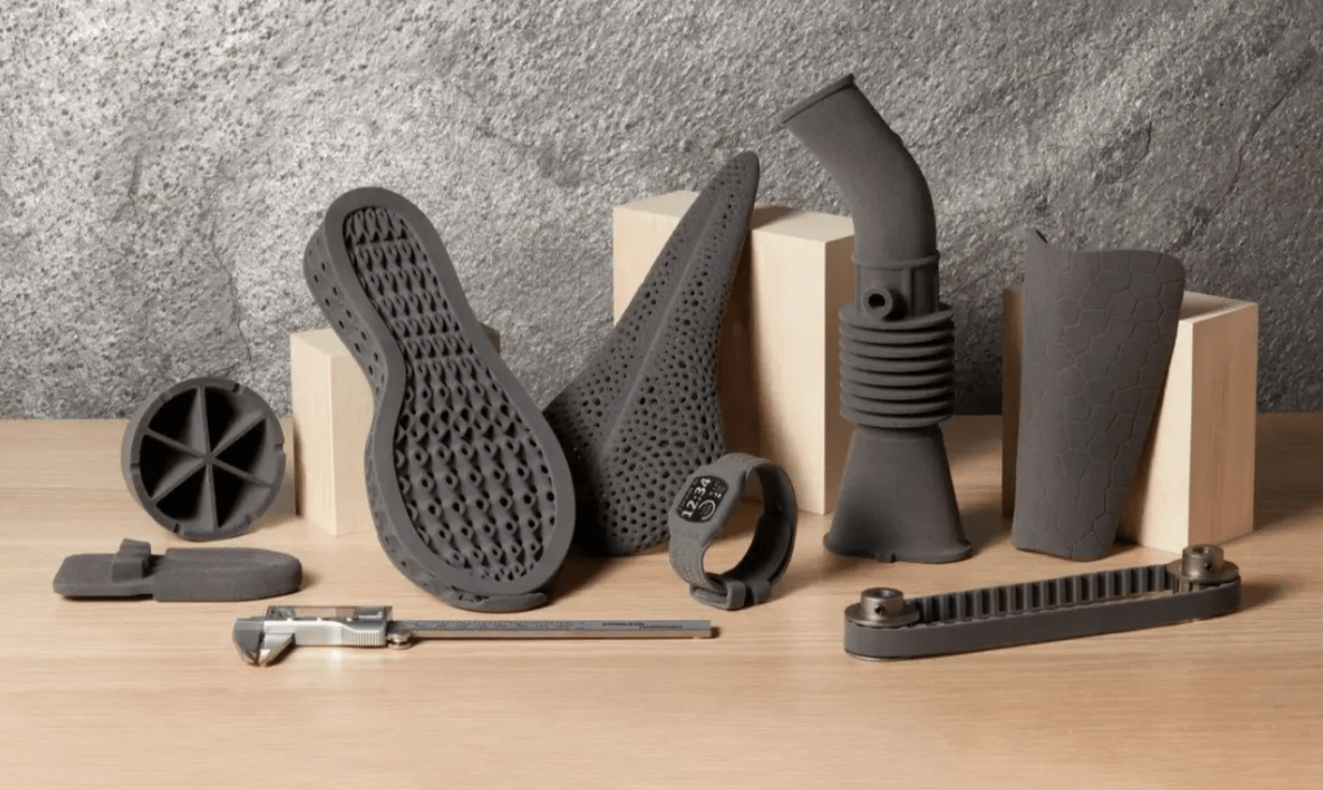
Because SLA cures a liquid resin, it is capable of reproducing extremely fine micro-details, sharp edges, and highly transparent optical parts (using Clear Resin). The surface finish is unparalleled, making it the go-to choice for visual prototypes, jewelry master patterns, and consumer electronics shells. On the other hand, SLS parts have a slightly porous, matte, and sandy texture due to the nature of the fused powder. While SLS parts can be polished or dyed, they naturally lack the glass-like smoothness of SLA components.
3. Mechanical Strength and Functional Durability
When analyzing mechanical performance in the SLS vs SLA 3D printing debate, SLS generally takes the lead for robust engineering applications.
SLS materials, particularly Nylon PA12 and Polypropylene, exhibit exceptional impact strength, high toughness, and outstanding fatigue resistance. They are ideal for living hinges, automotive under-hood components, and snap-fit joints. Standard SLA resins, while rigid, can be brittle under heavy impact. However, the introduction of Tough and ABS-Like resins has closed this gap significantly, offering excellent impact resistance for functional prototype manufacturing.
4. Design Freedom and Support Structures
A massive advantage in the SLS vs SLA 3D printing comparison goes to SLS regarding structural design freedom.
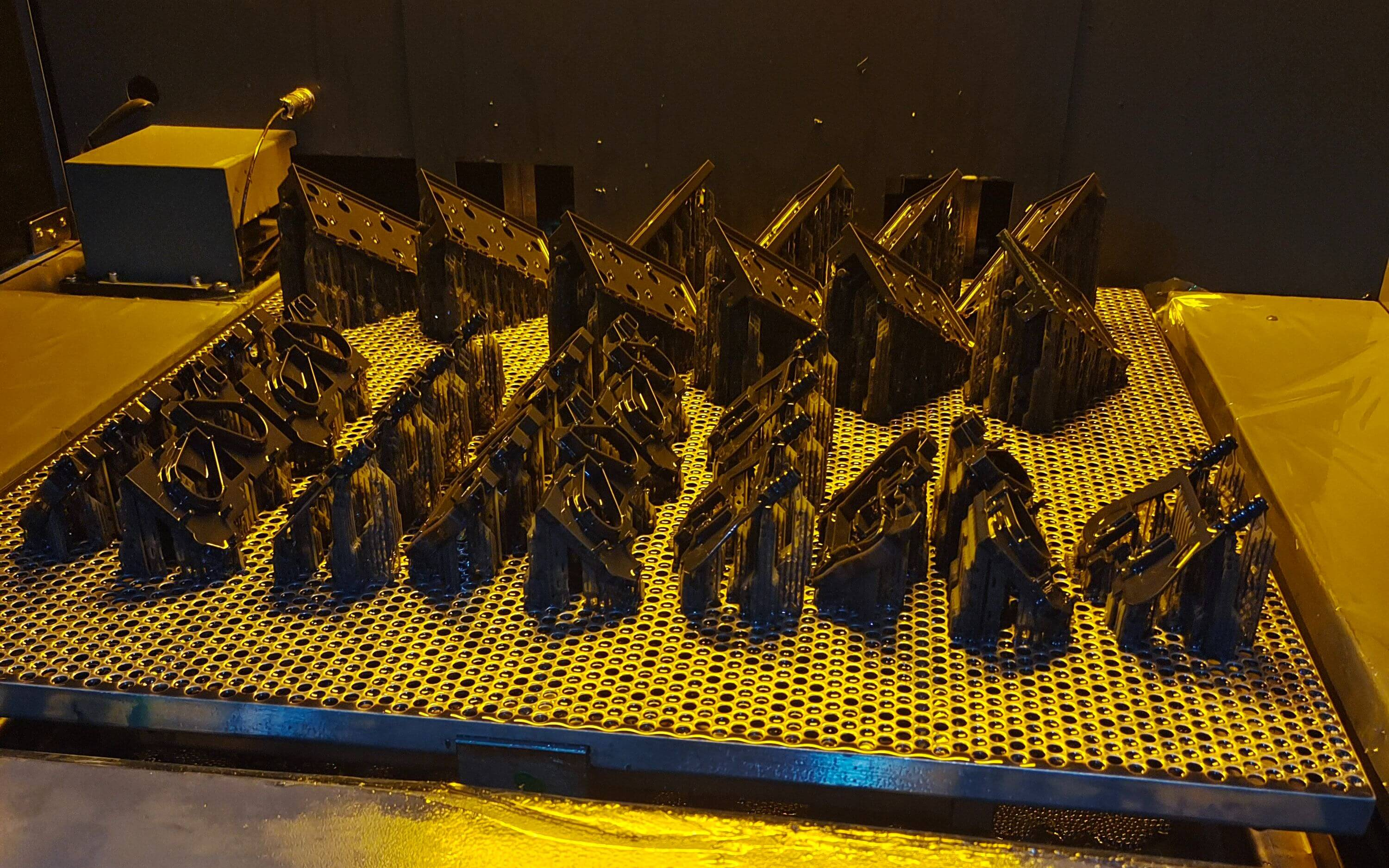
SLA printing requires extensive support structures to anchor overhangs and bridges to the build platform, which must be manually removed later. SLS requires zero support structures because the unsintered powder inside the build chamber naturally supports the part as it prints. This allows engineers to design incredibly complex, nested geometries, interlocking mechanisms, and internal channels that are physically impossible to create with any other manufacturing method.
5. Production Volume and Batch Scalability
For B2B clients looking to scale, assessing the production efficiency of SLS vs SLA 3D printing is vital.
Because SLS does not require support structures, parts can be densely packed and stacked vertically within the entire 3D volume of the build chamber. This makes SLS highly efficient for low-to-medium volume batch production of end-use parts. SLA is generally limited to printing directly on the flat build plate, making it slightly more suited for single rapid prototypes or smaller batch runs.
6. Cost Efficiency and Material Utilization
Cost is always a driving factor. In the SLS vs SLA 3D printing cost breakdown, SLS often provides better long-term material utilization for larger runs. The unsintered Nylon powder used in SLS can be highly recycled and mixed with fresh powder for subsequent prints, drastically reducing material waste. SLA resins cannot be recycled once cured, and the liquid resin that remains on the printed supports is ultimately discarded, adding slightly to the overall material cost.
7. Post-Processing and Surface Treatments
The final step in SLS vs SLA 3D printing involves post-processing. SLA parts must be washed in isopropyl alcohol (IPA) to remove sticky uncured resin, and then UV-cured to achieve maximum strength. Afterward, support marks must be sanded away. SLS parts simply need to be excavated from the powder bed and bead-blasted to remove excess powder. Both processes can be followed by advanced surface treatments, such as painting, dyeing, or specialized coatings, to meet final industrial standards.
Making the Right Choice with Printreal 3D
Deciding between SLS vs SLA 3D printing ultimately comes down to your project's specific priorities: choose SLA for unmatched visual clarity and smooth surfaces, and choose SLS for rugged mechanical strength and complex, support-free geometries.
As a direct-to-factory partner backed by 12 years of integrated manufacturing excellence, Printreal 3D operates a massive fleet of over 100 advanced machines, perfectly equipped for both SLA and SLS technologies. We empower global engineers with our strict quality control, agile No MOQ policy, and highly reliable fast delivery. Contact our engineering team today, and let us help you select the perfect high-performance polymer for your next industrial project.

 recommend