


 2026-04-15
1. Defining Topology Optimization for Suspension Uprights
2. The Synergy with SLM Additive Manufacturing
3. Performance Benefits of a 40% Weight Reduction
4. Cost Reduction in Enterprise Operations
5. Comprehensive Full-Process Custom Manufacturing
Accelerate Your R&D with Printreal 3D
The Critical Need for Automotive Lightweighting
In the rapidly evolving landscape of modern automotive and high-end industrial manufacturing, lightweight design has shifted from a luxury feature to an absolute engineering necessity. Whether designing components for electric vehicles (EVs) seeking extended battery range, or performance race cars aiming for faster track times, reducing mass is paramount.
High-strength structural components need to perfectly balance extreme durability, high load capacity, and overall energy efficiency. This is especially true for mechanical metal assemblies connecting the chassis to the wheels. Today, utilizing topology optimization for suspension uprights has emerged as the ultimate solution to strip away unnecessary weight while actually improving the kinematic performance of the vehicle.
1. Defining Topology Optimization for Suspension Uprights
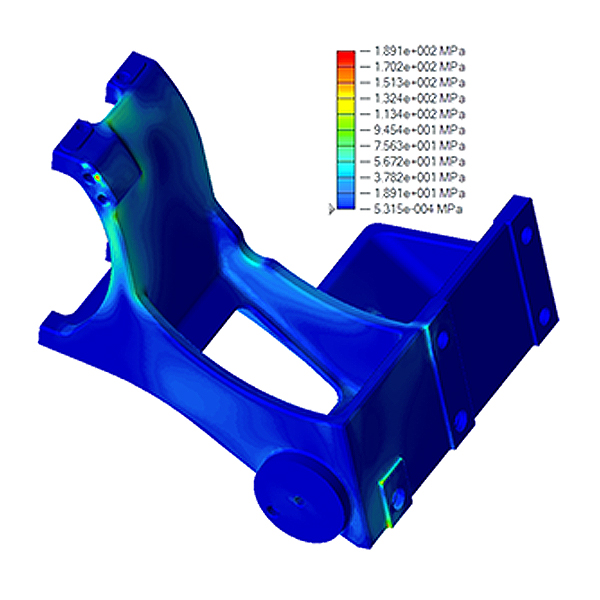
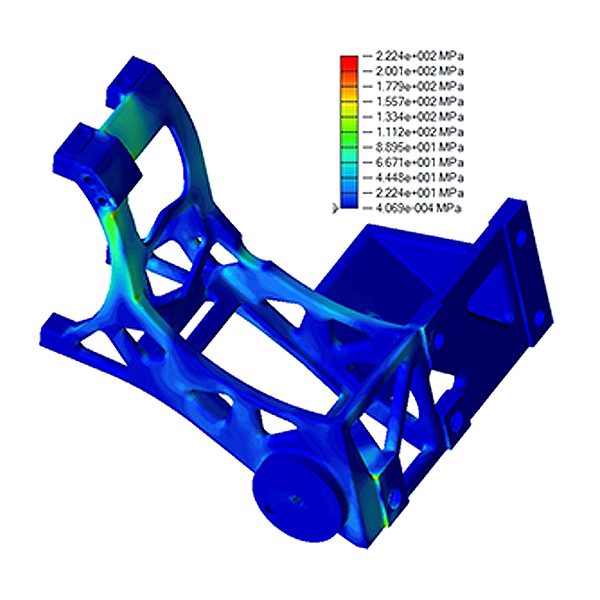
To understand how a 40% mass reduction is safely achieved, we must look at the underlying engineering. Topology optimization for suspension uprights is a highly advanced structural design technology that leverages sophisticated Finite Element Analysis (FEA) software to simulate complex, real-world force distributions.
Instead of relying on human intuition to guess where material is needed, the software mathematically calculates the exact load paths traveling through the part during acceleration, braking, and cornering. It strategically removes redundant material areas (the "dead weight") and heavily reinforces the critical stress points. The result of applying topology optimization for suspension uprights is a highly organic, bionic, and lightweight part structure that completely shatters the limitations of traditional, blocky engineering design thinking.
2. The Synergy with SLM Additive Manufacturing
Having a brilliant generative design is useless if a factory cannot physically manufacture it. This is where the true power of this technology shines. The complex geometries generated by topology optimization for suspension uprights are almost always physically impossible to produce using traditional subtractive CNC milling or conventional casting molds.
However, when combined with SLM 3D printing services (Selective Laser Melting), this revolutionary design concept can be fully realized. Additive manufacturing builds the metal component micro-layer by micro-layer from metal powder (such as AlSi10Mg or Titanium). It easily supports the complex hollow sections, internal lattice structures, and highly integrated bionic shapes required by topology optimization for suspension uprights, realizing the perfect match of digital design and physical production.
3. Performance Benefits of a 40% Weight Reduction
In vehicle dynamics, not all weight is created equal. The suspension upright is a critical component of the vehicle's "unsprung mass"—the weight not supported by the car's suspension springs.
By successfully executing topology optimization for suspension uprights, engineers can reliably achieve a staggering 40% weight reduction on these critical parts. Dropping unsprung mass brings multiple compounding benefits: it drastically reduces the overall equipment load and energy consumption, significantly improves the wheel's motion flexibility over bumps, and enhances steering response performance. Most importantly, because the material is placed only along the calculated stress paths, the optimized upright maintains or even exceeds its original mechanical yield strength and fatigue resistance.
4. Cost Reduction in Enterprise Operations
Beyond the immediate mechanical upgrades, implementing topology optimization for suspension uprights creates long-term financial advantages. In traditional subtractive manufacturing, massive blocks of expensive billet aluminum or steel are machined away, resulting in high material waste and tooling costs.
Because additive manufacturing only consumes the metal powder required to build the specific bionic geometry, material waste is reduced to near zero. Furthermore, achieving a 40% lighter component through topology optimization for suspension uprights effectively lowers long-term operational costs, shipping fees, and mechanical wear-and-tear. Our practical engineering projects have proven that this weight reduction occurs without ever sacrificing structural safety or bearing assembly accuracy.
5. Comprehensive Full-Process Custom Manufacturing
Successfully upgrading to lightweight components requires more than just printing a part; it requires a holistic engineering approach. We provide one-stop manufacturing solutions serving the automotive, intelligent automation, engineering machinery, and high-end industrial equipment sectors worldwide.
Our full-process service for topology optimization for suspension uprights covers every stage of development. We begin with structural redesign and rigorous topology simulation. We then move to SLM metal 3D printing, followed by high-precision custom CNC machining to ensure bearing press-fits and mounting points meet aerospace-grade tolerances. Finally, we apply specialized surface treatments to ensure maximum longevity and corrosion resistance.
Accelerate Your R&D with Printreal 3D
The transition to advanced bionic manufacturing is the defining competitive advantage for modern engineering firms. If your automotive or industrial project is suffering from excessive component weight, applying topology optimization for suspension uprights is the most effective engineering upgrade available today.
Printreal 3D specializes in bridging the gap between cutting-edge generative software and physical metal manufacturing. Our custom design capabilities and small-batch rapid production help global manufacturers shorten their R&D cycles and massively upgrade product competitiveness. With our strict quality control and highly reliable fast delivery, your lightweight innovations will reach the testing track faster than ever. Contact our engineering team today for a comprehensive project evaluation.

 recommend