


 2026-02-13
1. The Core Principle of Selective Laser Melting (SLM)
2. Breaking the Limits of Traditional CNC Processing
3. Unmatched Production Efficiency and Cycle Times
4. Superior Material Properties and Lightweight Design
5. Comprehensive Post-Processing and Quality Control
Transform Your Supply Chain with Printreal 3D
Overcoming Traditional Manufacturing Bottlenecks
In the competitive landscape of modern manufacturing, traditional metal processing methods like casting, forging, and basic milling often hit a hard ceiling when tasked with producing highly intricate, hollow, or integrated customized components. Engineers frequently find themselves compromising on their ideal designs simply because the factory cannot physically manufacture the geometry.
This is where the transformative power of additive manufacturing comes into play. Today, utilizing SLM 3D printing for complex metal parts has become a mainstream advanced manufacturing method for high-end industrial metal components, effectively solving long-standing processing pain points. Below, we explore the five core reasons why adopting this technology is essential for future-proofing your supply chain.
1. The Core Principle of Selective Laser Melting (SLM)
To understand the benefits, we must first look at the core processing flow. Selective Laser Melting (SLM) is a highly advanced powder bed fusion technology. It uses a high-precision, high-powered laser to selectively melt and fuse micro-fine metal powder layer by layer based on a digital CAD file.
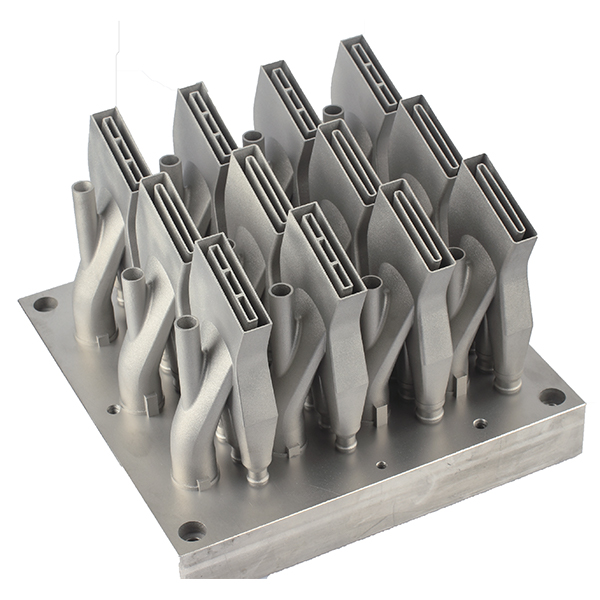
This process supports a wide array of industrial-grade materials, including stainless steel, aluminum alloy, titanium alloy, and high-strength tool steels. The most significant advantage of utilizing SLM 3D printing for complex metal parts is that the entire process realizes one-piece integrated forming. There is absolutely no need for expensive casting molds, and it eliminates the need for weak welding splicing, ensuring the structural integrity of the final component from the ground up.
2. Breaking the Limits of Traditional CNC Processing
Traditional subtractive manufacturing requires a cutting tool to physically reach the surface it is milling. This creates massive blind spots for internal geometries. By utilizing SLM 3D printing for complex metal parts, engineers can completely break through these traditional processing limits.
Because the part is built micro-layer by micro-layer, it perfectly solves the processing pain points of special-shaped structures, ultra-thin-wall parts, and internal complex flow channels (such as conformal cooling in injection molds) that are notoriously difficult or downright impossible for turning and milling. This capability vastly expands the design space, though it is often best paired with custom CNC machining for final high-precision surface finishing on critical mating points.
3. Unmatched Production Efficiency and Cycle Times
For B2B industrial clients, time is money. Waiting months for tooling and mold fabrication is no longer viable in fast-paced markets. Stable precision, strong material compatibility, and flexible customization make SLM 3D printing for complex metal parts incredibly efficient.
This technology supports both rapid prototyping and mass customized production. Because there is zero tooling setup time, manufacturers can transition from a digital design to physical production almost immediately. This dramatically shortens the lead time for sample verification and project iterations. Furthermore, with an agile manufacturing partner, clients can enjoy extremely fast delivery for urgent functional prototypes, keeping strict R&D timelines perfectly on track.
4. Superior Material Properties and Lightweight Design
There is a common misconception that 3D printed metals are weaker than forged metals. In reality, the material and performance advantages of SLM 3D printing for complex metal parts are outstanding. SLM printed parts feature incredibly high density, exceptional mechanical properties, and excellent corrosion resistance that meet strict industrial standards.
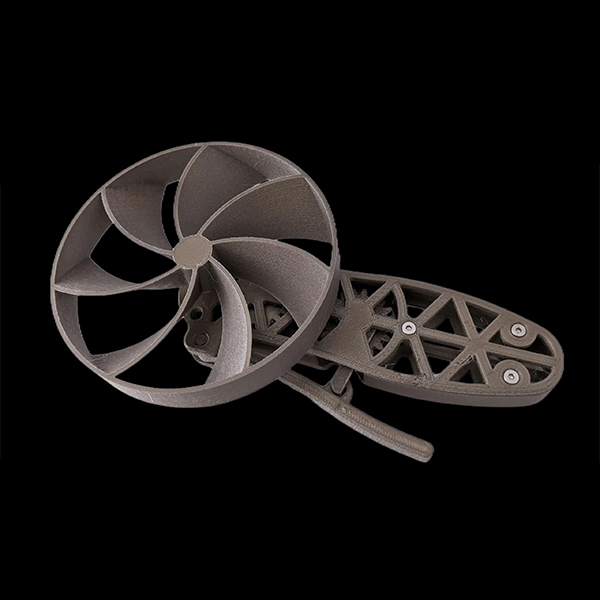
More importantly, this technology is the ultimate enabler for advanced topology optimization services. Engineers can design bionic, lattice-filled structures that remove all redundant material while reinforcing critical stress paths. By leveraging SLM 3D printing for complex metal parts, companies can produce ultra-lightweight components that maintain maximum load capacity—a critical requirement for the automotive, aerospace, and new energy sectors.
5. Comprehensive Post-Processing and Quality Control
While the additive process creates the near-net shape, industrial assembly standards demand perfection. A successful strategy for SLM 3D printing for complex metal parts must include matching post-processing solutions.
Common post-processing technologies include CNC precision trimming for bearing press-fits, sandblasting for uniform surface aesthetics, oxidation, and specialized heat treatments to relieve residual stress and maximize material hardness. Furthermore, rigorous quality inspection and control are mandatory. Every finished metal part must undergo strict dimensional tolerance checks with CMM equipment and surface quality testing. This ensures that every product relying on SLM 3D printing for complex metal parts fully meets rigorous industrial assembly and end-use standards.
Transform Your Supply Chain with Printreal 3D
The era of compromising your engineering designs due to manufacturing limitations is over. Whether you are developing lightweight aerospace brackets, conformal cooling mold inserts, or custom medical implants, utilizing SLM 3D printing for complex metal parts is the key to unlocking unprecedented performance and innovation.
As a direct-to-factory manufacturer, Printreal 3D provides end-to-end solutions for your most demanding projects. From initial generative design support to advanced metal printing and final CNC finishing, we rely on mature SLM production lines to deliver reliable, high-quality customized metal parts. Contact our engineering team today to learn how our fast delivery and flexible manufacturing capabilities can elevate your next industrial breakthrough.

 recommend